
Reflections on almost one year of Correnti, our local book club in Monfalcone, and what coming together around stories can teach us about rebuilding civic life.
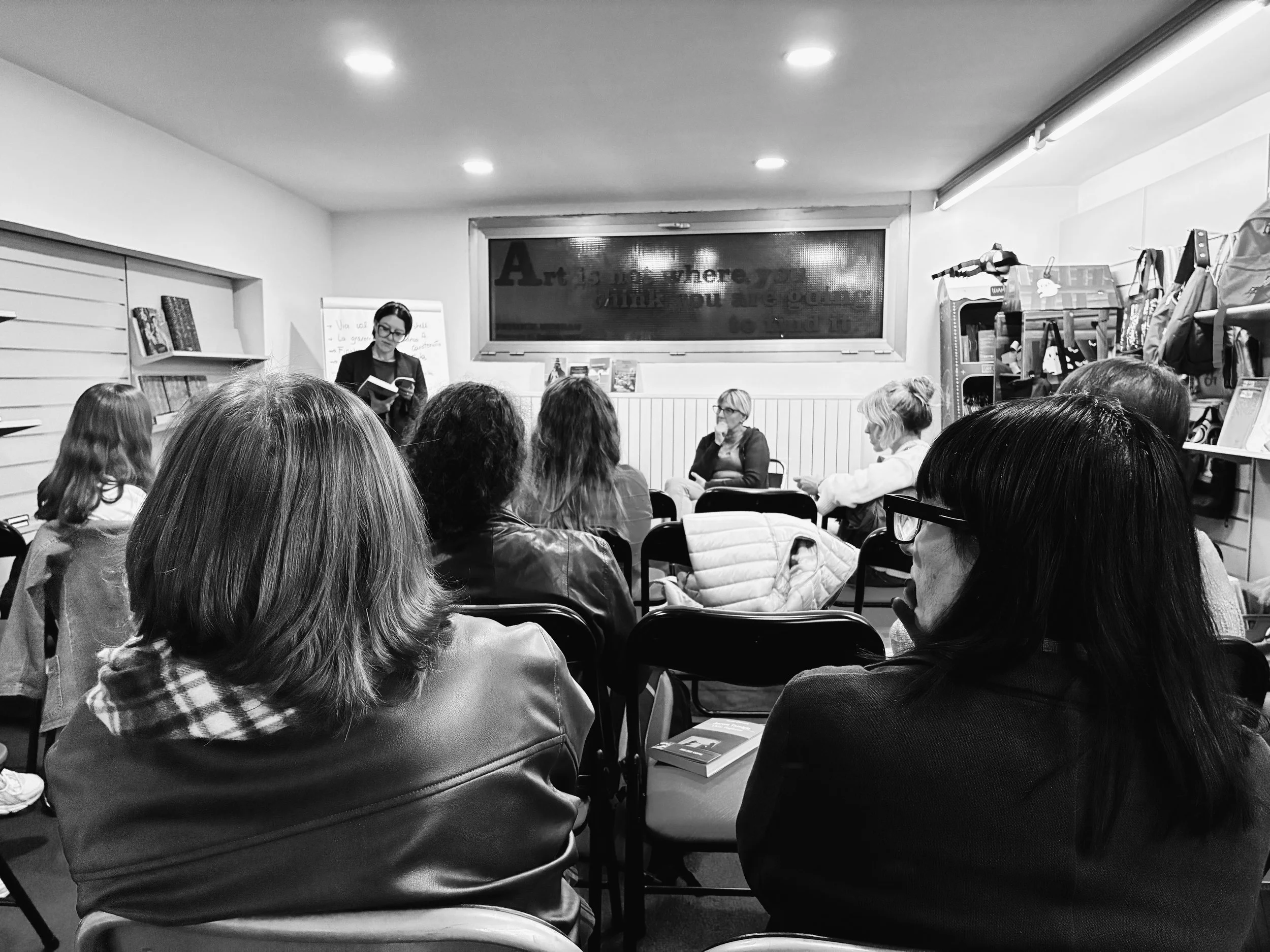
We recently celebrated almost twelve months of Correnti, our local book club in Monfalcone, Italy. We launched an invitation to read together in December 2025. Over the months, our monthly appointment has gradually become a recurring space for people to meet, exchange perspectives, share experiences, and cultivate relationships around a common interest.
What makes a book club a catalyst of democracy renewal in local contexts?
At first glance, a book club might seem like a rather ordinary community initiative. People gather, discuss a book, exchange opinions, and decide what to read next. Yet, looking more closely at what happens in these encounters, we begin to recognise something that extends far beyond literature.
So, how political can a book club be?
Stories as a common ground
Books introduce us to characters, worlds, places, histories, and experiences that may be very distant from our own. They invite us into unfamiliar realities while often revealing something relatable about our lives. At the same time, they challenge us to question old beliefs and assumptions about certain social orders and values. They do something deeply strategic from a democratic lens: they encourage pluralism without making this an explicit goal.
When reading becomes a collective experience, something quite political happens. Individual interpretations enter into dialogue with one another. A character that evokes empathy in one reader might provoke frustration in another. A story might resonate with someone's personal history, while introducing someone else to a perspective they had never considered.
The book becomes a shared point of departure for something much greater: a process of collective sense-making.
As a group, we bring our own experiences into the conversation, but we also allow them to be questioned, expanded, and reshaped by the experiences of others. Through stories, we meet different fictional worlds and the different worlds inhabited by the people sitting next to us.
And perhaps this is where the most important part of a book club begins: reading becomes an excuse to spend quality time together.
Relationships are something we practice
At Correnti, as in many other community spaces, participation is not about showing up to an activity. It is bringing part of ourselves into a shared space. It takes courage and commitment to doing this. Over 12 months we hosted 160 readers from our community, with some participants coming back at every single appointment. Each of the 160 community members brought themselves and their vision of the world into the room to open it to others and share it through the channel of literature, investigating what the world, through all the worlds we read in the books, means for them. This is what the essence of democratic practice looks like.
When someone proposes a book, it might look like they are sharing a reading recommendation, but the reality is that they are bringing forward a story, a question, a curiosity, or a theme that matters to them. They are allowing a small part of their personal world to enter the collective space.
In this process, they simultaneously make themselves available to welcome the interests, perspectives, and experiences of others. To work with it. To receive it and make it part of their own process.
This exchange may seem basic, but it requires a series of relational practices: listening, making room for different opinions, negotiating preferences, embracing curiosity, and accepting that our interpretation is not the only possible one.
It also allows us to explore values without necessarily naming them as such. What moves us in a story? What do we find unjust, beautiful, troubling, or hopeful? Why do we identify with certain characters and reject others?
These conversations surface something about how we understand ourselves, one another, and the societies we inhabit. And in this context, we observe the way relationships do not emerge through the physical presence of people in the same room, but in the way relationships are cultivated in the repetition of encounters, shared attention, and the willingness to keep showing up in a relational space.
And a book club offers a particularly powerful ingredient for this process: a reason to come back.
Choosing the next reading, looking forward to a conversation, or having a regular opportunity to engage with a personal passion creates continuity. Over time, familiar faces become acquaintances, acquaintances become relationships, and a recurring gathering begins to form part of people's sense of belonging.
What does any of this have to do with democracy?
Quite a lot, we believe.
When we speak about strengthening democracy, we often focus on formal participation: public consultations, citizens' assemblies, deliberative processes, and opportunities for residents to influence decisions.
These mechanisms matter. But they do not exist in isolation from the social and relational conditions that make participation possible. People need to feel comfortable entering collective spaces. They need opportunities to express themselves, experience disagreement, listen to others, and recognise that their presence and perspectives matter.
A book club does not necessarily constitute a deliberative democratic process. Its participants are not collectively deciding public policy, nor are they necessarily organising around a shared political objective. Yet it creates situations in which some of the fundamental practices of democratic life can be experienced in accessible ways.
People gather voluntarily. They bring different perspectives. They listen, respond, disagree, and sometimes change their minds. They contribute to shaping a shared experience and make small decisions about what happens next.
Before democracy is understood as something people exercise through institutions, democracy is first something we learn, cultivate, and practice through our relationships.
And these practices become particularly important in places where civic participation has weakened, where communities are fragmented, or where trust in public institutions has eroded.
Rebuilding civic life starts before participation
In our work at Collettivo Onda and Commonground Initiatives, we often return to a fundamental question: how can we invite people back into collective civic life when they have gradually lost trust in the spaces and systems meant to represent them?
It is tempting to approach democratic renewal by telling residents that they have power, that their voices matter, and that they should participate more actively in public decision-making.
But what happens when people no longer believe these promises and have long lost touch with the more institutionalised practices of participation? What happens when the very institutions inviting participation are the ones from which residents have felt excluded, disappointed, or unheard?
Asking people to re-enter those systems without first addressing the relational distance that has developed risks reproducing the same dynamics of disengagement.
We believe rebuilding civic life requires a more gradual process.
Before asking people to participate in formal decision-making, we may need to create opportunities for them to rediscover the value of being together. Before inviting them to shape collective futures, we may need to cultivate spaces in which they can experience what it means to belong to a collective in the first place.
These spaces do not always need to be explicitly political.
What matters is not only the activity itself, but the relationships and forms of collective experience that it makes possible.
The democratic potential of ordinary gatherings
Book clubs have been attracting renewed interest, including among younger generations seeking opportunities to connect beyond digital spaces and engage with others around shared passions. There is something worth paying attention to in this renewed appetite for gathering.
A shared interest can bring people into the same room who might otherwise never have met. It can create an accessible entry point into collective life, one that does not require political expertise, prior civic engagement, or even a particular understanding of oneself as an active citizen.
People come because they enjoy reading. They stay because they discover the value of the relationships that form around it.
So, these ordinary gatherings can become spaces where people practice the very capacities that democratic societies need: curiosity, mutual recognition, openness to difference, shared responsibility, and the willingness to remain in relationship.
Coming together is already part of the work
Almost one year into Correnti, what feels most meaningful is not the number of books we have read or the conversations we have had about them. It is the fact that people continue to come together.
That a shared interest has become a recurring collective practice. That stories have opened pathways into personal experiences, different perspectives, and new relationships. That people have found a reason to return to a common space and contribute to shaping it.
In a time when we speak so often about democratic crises, polarisation, and the erosion of social cohesion, perhaps we should pay more attention to these seemingly ordinary experiences, and create low-barrier opportunities for communities to find their way back into feeling safe in collective gatherings.
And sometimes, that opportunity is a book.